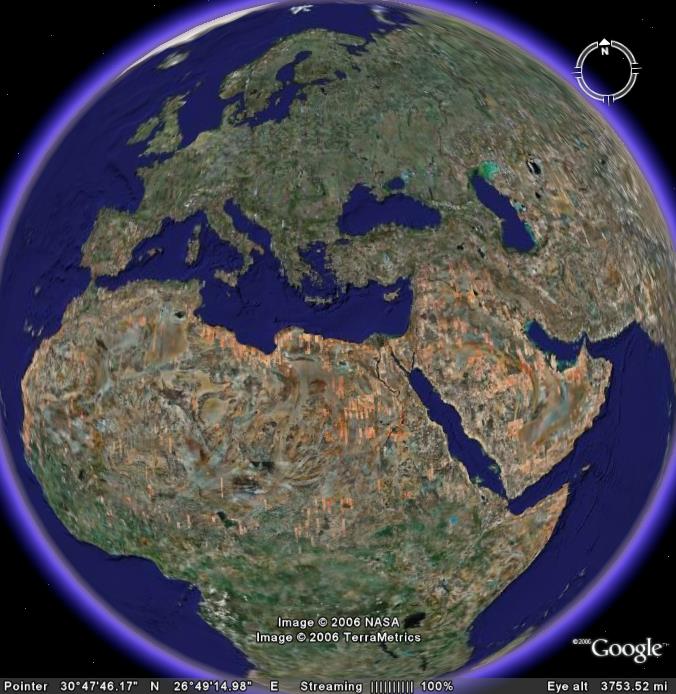
This
course is an anthropological inquiry into various forms of cultural,
religious,
ethnic and linguistic diversity within and among Islamic societies and
cultures. Our goals will be to, 1. broaden
our understanding of the societies in question, and 2. sharpen the way
we think about society, culture and religion.
Your grade will be determined by ten quizzes, ten “news reports,”
an end of the semester news summary, and three exams. Quizzes will count 2% each, for
a total of 20%. Quizzes will not be announced in advance, but we will
have
at least eleven, from which your best ten will count towards your grade.
News reports will be a one page summary of the week’s news in some
assigned
region of the world and will be worth 1% each. Click
here for sites people have chosen to follow in the past.
There
are fourteen possible weeks in which to do a report; your best ten
reports
will count towards your grade. You must be in class to discuss your
report
to receive credit. At
the end of the semester you will submit a short paper summarizing the
newsworthy events in your region. This will count as 5% of your
grade. The first two exams are
worth
20% each, the final is worth 25%. If you miss either of the
exams, you may substitute the score of the other minus 20%. There will be no make up work, quizzes, exams or papers. Please do not ask.
Burke,
Edmund. 1993. Struggle and survival in the modern
Maalouf,
Amin. 1992. Leo Africanus.
Sardar,
Ziauddin and Merryl Wyn Davies. 2004.
The No-Nonsense Guide to Islam.
Asad,
T. (1993). Genealogies of
Religion: Discipline and Reasons of Power in Christianity and Islam.
Baltimore,
JohnHopkinsUniversity Press. Pp.27-54 Beinin,
Joel. No More Tears:
Benny
Morris and the Road Back from Liberal Zionism. MERIP 2004 Eickelman, Dale
F. 2002. The Fromkin, David“How the Modern Middle
East Map Came to be Drawn,” Smithsonian 22 (May 1991), 132-47.
Klein, Naomi. 2004. Denny, Frederick 1994. An introduction
to Islam. Geertz, Clifford. 1973.
“Religion
as a Cultural System” in The Interpretation of Cultures. Manger, Leif O. 1999. “Introduction”
in Muslim diversity : local Islam in global contexts. Whitmore, B. (2003). Letter from Schedule of September 4 –
Introduction
to the Course– no reading assignment Section I: Islam as
Religion September 8:
read Geertz, Asad
September 11: read Eickelman September 15:
read Ali 24-30 (Origins of Islam), and 49–68 (The Joys of Heresy; Women versus Eternal Masculinity) September 18: Sardar and Davies to pg. 51. September 29: read Denny, Fromkin October 2: read Maalouf, Book I
October 6: read Ali, pp. 31-43 (Empire of the World; Jerusalem, Jerusalem) October 14: Watch these videos [NOTE Tuesday class]
October 16:
read Maalouf, Book III,
Burke, chap. 3 (Shemsigul)
October 20: read Maalouf, Book IV, and Ali, pp. 44-48 (Ottomanism)
Bickerton, Ian J. & Carla L. Klausner. 2002.
A concise history of the Arab-Israeli conflict.
September 22: Sardar
and Davies, pp.
52-131. Your potential exam questions are posted here.
September 25: Exam 1
Section II: Islamic History
October 9: read Maalouf, Book II
October 27: read Burke, chaps 10 (Abu Ali the Qabaday), 19 (Haddou), 20 (Nasir)
October 30: Exam 2 Here is a map to study for Exam2 Here is one set of questions.
Here is a second set of questions to study for the exam.
Section III: Islam,
Politics, and Ideology
November 3: read Bickerton & Klausner,
Beinin November 6: read Ali, pp. 86-125 (Zionism..., Marginal Notes) November 10: read Ali, pp. xii-11 (Prologue), 141-153 (An Ocean of Terror)
November13: read Ali, pp. 279-328 (A Short Course History; September Surprise)
November 17: read
Klein,
Ali pp. 73-85 (The Roots of Wahhabism, The Kingdom of Corruption) November 20: read
Manger (only pps.
1-18) (Academic meetings -- no class.)
November 24: read
Burke, chaps.
12 (Hagob), 13 (Naji), 24 (June Leavitt) (Academic meetings -- no class.) Dec 1: read read
Ali, pp. 126-140 (Anti-Imperialism of Fools); Burke,
chaps. 16 (Iranian Boyhood), 22 (Khanom Gohary)17
Dec. 4: read
Burke, chaps. 5 (Ahmed), 7 (Bibi Maryam), 17 (Gulab), Whitmore Dec. 8: final lecture and review Here are the exam questions you wrote.
Section IV: Diversity and Daily Life
Final
exam : Saturday, December 13th at 9 a.m.
| A | 93-100 |
| A- | 90-92 |
| B+ | 87-89 |
| B | 83-86 |
| B- | 80-82 |
| C+ | 77-79 |
| C | 73-76 |
| C- | 70-72 |
| D | 60-69 |